Education

A high-performing trade show booth first starts on paper, with a well thought-out Request for Proposal (RFP).
This insight gives you the blueprint necessary for your exhibit builder to craft an outstanding exhibit design that engages your target audience and supports your marketing objectives.
Why Strong RFPs Matter
Attendees want unique experiences, and companies are willing to spend large amounts of money to seize their attention. In fact, exhibitors spend an average 31.6% of their entire marketing budget on trade shows [Wave Connect 2025] .
An effective RFP is the critical link that connects your company’s vision to the final exhibit experience realized. In the absence of a comprehensive RFP, vendors simply have to guess what your goals are, resulting in generic proposals, crossing budgets, and a less-than-optimal booth.
How to Chart the Course to Great Results
A “strong” RFP is more than just the bare minimum. It inspires ideas, encourages collaboration, and defines success. It ensures you are not just simply contracting with a sponsor but partnering with the exhibit house and designer that is truly invested in your company’s success at the trade show. Ultimately, this reduces guesswork, the need for costly revisions, and hugely increases the odds of generating a booth that gets people talking, boots them up, and generates the results that matter.
Phase 1: Core Areas of Focus
The first step in creating a great trade show exhibit is to start with refined thinking within your company. It's essential to know where you are and what you want before you consider any vendors - bringing alignment and clarity to each step of the RFP process.
Your Brand Identity
The RFP will need to communicate your brand personality, values, and identity effectively. This includes brand guidelines, brand color schemes, logo, typography, and previous marketing plasticity. Telling the brand's tone helps the designer with aesthetic and functional design requirements within the booth, so that the customer experience is molded by who you are and what you do.
Your Marketing Goals and Endpoints
What are you trying to achieve by this trade show? Are you working to generate leads, build product awareness, establish thought leadership, or reinforce existing relationships? You want your RFP to clarify those goals and quantify them. A target number of qualified leads or key demographic information on your primary target market will play a huge role in determining the design of the exhibit and its functional parameters.
Forming the “Buying Center” and Project Stakeholders
Successful exhibit development involves multiple internal stakeholders. You’ll want to create a “buying center” that may include marketing, sales, product development, and executive leadership.
By creating a clear internal process for review and approval, you will help streamline communication with potential vendors and assist with ensuring the final design will meet the needs of your entire company.
Realistic Budget Allocation
A reasonable and realistic budget breakdown is the cornerstone of any good RFP. This budget information should include all estimated costs of ownership for the trade exhibit display from start to finish, not just booth fabrication costs. Take into account design fees, shipping and transportation, storage requirements, exhibition equipment installation and dismantle (I&D), A/V elements, technology integration, lighting, graphics, personnel, and any contingency funds. Vendors need to know how the budget is stated to propose innovative yet affordable solutions.
Phase 2: Fabricating Your Vision
With a strong strategic foundation in place, the next step is to convert your objectives and brand identity into a concrete set of product and partner requirements. This page covers what you want to accomplish and how you want to accomplish it in your exhibit.
Comprehensive Exhibit Designs and Functional Requirements
This is the point where you start describing your booth design requirements. Specify your square footage requirements, booth layout, and traffic flow. You should also choose to detail your functional needs, such as meeting space requirements, live product demo stations, and gamification zones.
Technical & Operational Specifications.
Your exhibit needs to be technically operable. Describe your needs for audio-visual equipment (screens, speakers, projectors), IT infrastructure (internet, power), interactive tech (kiosks, AR/VR), and data capture/lead retrieval systems. By being clear on your technical needs early, you're giving vendors ample time to integrate modular systems that are functional throughout the trade show.
Logistics and Operational Expectations
An exhibit’s success is dependent on its event logistics. Your RFP should communicate expectations with shipping logistics and storage (pre-show & post-show), on-site services, delivery dates, I&D procedures, requirements for union labor, plus any expectations you have for the vendor’s on-site support during the trade show. By addressing logistics as a priority as a factor in the RFP, vendors have a clear understanding of the depth of work that needs to be completed, and the expectation that all potential operational challenges are anticipated before the event, so that on-site mishaps are avoided.
Promoting Innovation and Sustainability
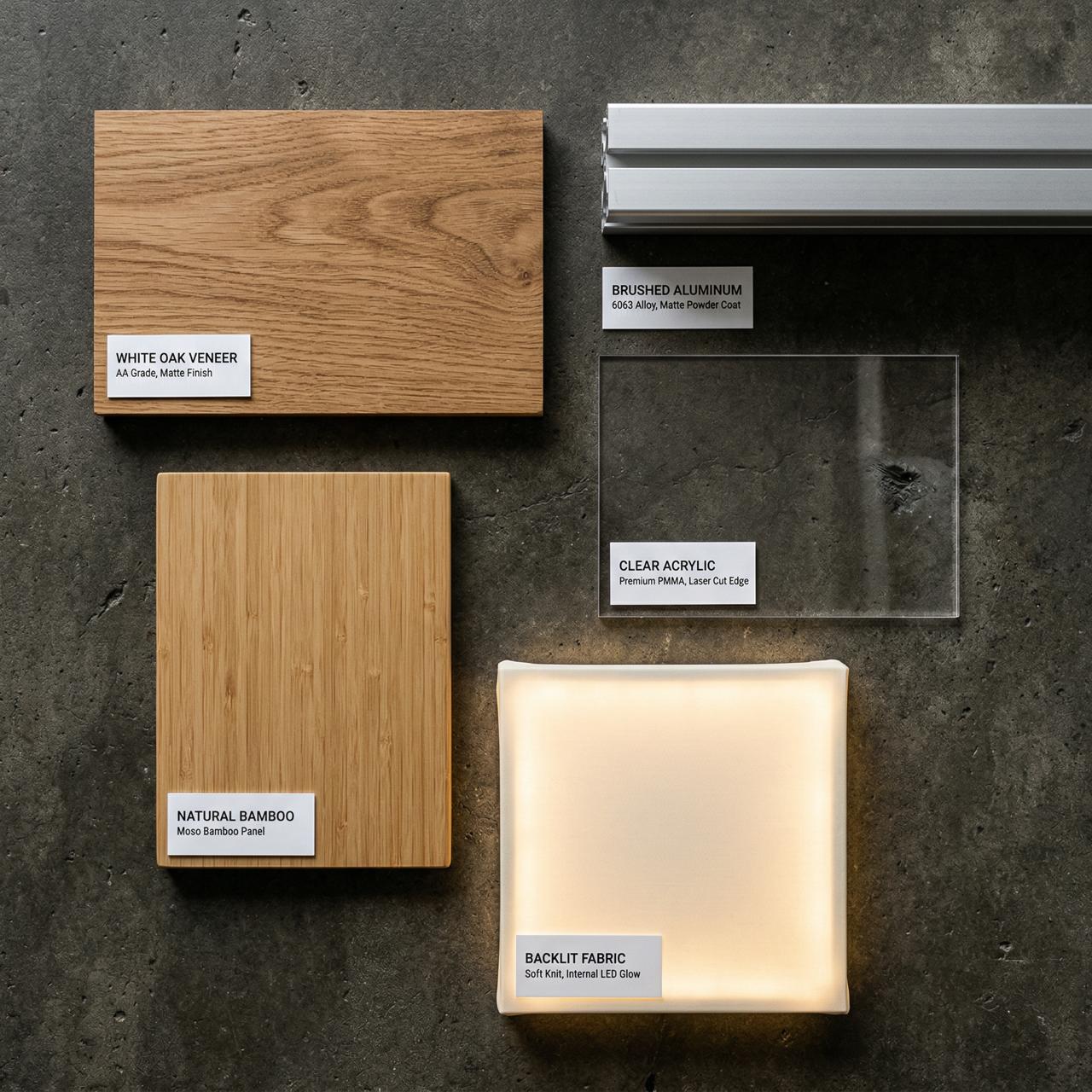
Invite vendors to add sustainable exhibit properties to your requirements by asking vendors how they incorporate eco-friendly materials, waste minimization, and reusable exhibit components. Eco-friendly display materials and finishes allow for a 'sustainability-first' brand positioning that attracts crowds that value green initiatives, allowing for a more diverse range of incoming leads.
Phase 3: Documenting Your RFP
Once all of the requirements for your builder's trade show services are clear, the next step is to groom them into an organized and clear RFP document. The end goal of the RFP-writing process is to provide each vendor with the same core information so that each vendor is evaluated on a level playing field.
Key Sections of Your RFP
A comprehensive RFP contains an introduction with company background and a high-level overview of the project, detailed objectives, scope of work, design requirements, technical and operational specifications, logistical constraints, a clearly defined budget range and upper limit, with the proposed target date. You also typically want to include how you will be selecting vendors (key milestones/important dates), instructions for how to submit the proposals, and a point of contact for questions.
RFP Questioning Techniques
Ask questions in your RFP that allow you to assess vendor skills and methodology. Don’t settle for yes/no questions; ask them open-ended questions that require a narrative response. For example: “Walk us through your approach to designing innovative exhibits that tie into brand messaging.” or “Walk us through your approach to shipping and storage for such an exhibit, such that costs are minimized, and completion deadlines are met.”
Specifying Submission Requirements and Rules
Just as we need clarity on requirements, we need clarity on submissions. The things to clarify are the format of the proposals (e.g., PDF, file structure), means of delivery (email, portal to upload), and the critical deadline. You also need to know if they are to submit digital interface renderings, physical pieces, or presentations. You should also be clear about the vendor evaluation process, response tracking, and response quality.
Defining Clear Assessment Standards and Procedures
Describe the criteria that you will use to assess the proposals by describing how each criterion will be weighted. The most common criteria are design innovation, design relevance to goals, technical feasibility, fidelity to budget requirements, vendor experience and capability, innovation/sustainability, and partnership value. Letting custom booth fabricators know your rationale and what you value in advance helps them focus on what matters before submitting a vendor proposal.
Phase 4: Vendor Interaction and Selection
The next step is to manage the vendor engagement process and conduct a rigorous evaluation of all the proposals once your RFP has been issued.
Bidding Process Management
Set a clear exhibition timeline (for the bidding process) for vendors to submit their questions, and appoint one point of contact (like a marketing manager) to answer all questions in a consistent manner for all potential vendors. This will avoid the spread of misinformation between potential vendors, assuming you all "heard it the same way." Consider holding a very short Q&A or vendor briefing either live (in person or online) to answer questions and get more context on the project.
Review of Vendor Proposals and Presentations
Start by comparing how effectively each proposal addresses your RFP criteria and how well it lines up with your goals, budget, and design concept.
Booth designs concepts, technical solutions, and logistical strategies. Be on the lookout for vendor creativity, realistic thinking, and a clear understanding of your company and audience. If your presentations are part of the process, take note of the vendor’s skill to present their ideas and challenge their prospects.
Due Diligence and Vendor Selection
Check references from previous clients and see exhibits the vendor has produced to judge overall quality and style. You may also want to interview the vendor about their financial status. Is the vendor good for business? Is it easy to work with them? Do they respond quickly to your needs? The need for a strong working relationship is as important as the need for an event marketing exhibit house.
Industry Relationships
The long-term goal of any tradeshow exhibit RFP is to find a vendor that will serve as a future partner. You want to find a custom booth builder that is proactive, problem solving, and invested in your success. The vendor should become an extension of your team with the end goal of maximizing your return on investment from your trade show marketing campaign.
Paint Your Masterpiece: Trade Show Success
Creating a perfect trade show exhibit RFP can be an exhaustive, yet fruitful endeavor that needs detailed planning, effective communication, and attention to the small details. By establishing a solid strategic base, building a clear vision of your trade show exhibit, laying your RFP out into a logical order, and putting a thorough vendor evaluation process in place, you are highly likely to have a successful trade show event.
Level's custom booth fabrication services understand your vision and the impact you want to have. We deep dive into your marketing KPIs and set measurable outcomes that define the success of your trade exhibit display.