Education

Budget implications are only the tip of the iceberg when it comes to buying vs renting a trade show booth.
This insight talks about the pros and cons of renting vs buying to help you devise effective trade show strategies that yield measurable results.
Breaking Down Your Trade Show Marketing Objectives
You must know what you want to achieve with your trade show exhibit before you can decide whether you should buy or rent. The best plan is always one that aligns with and supports your marketing and business goals. If there’s a lack of clarity at the beginning, then everything that follows your custom display booth is guesswork.
Marketing Goals and Strategy
How do you want to be perceived when you land at the next trade show? Are you eager to generate leads, increase brand awareness, launch a new product presentation, establish valuable partnerships, or educate your target audience about a unique solution? Each change in goal could change your approach to your exhibit. A product launch may require a highly customizable and interactive exhibit to best showcase a new product, while brand awareness marketing may require a visually eye-catching, memorable exhibit that highlights brand identity.
Trade Show Calendar and Cadence
The number and proximity of the trade shows you are targeting will have a huge influence on the purchase versus rent decision. If you are exhibiting frequently, for example, more than five times a year, you will probably find that the long-term cost comparison of purchasing a custom exhibit vs renting is more favorable. The reason for this is that the costs of renting over a long period outpace the upfront cost of a purchase. If you're only participating in one or two industry events a year, or in shows with wildly different needs, renting a custom exhibit may be the more appropriate and cost-effective choice.
Exhibit Space Requirements and Scalability Needs
Another key factor is the size and type of exhibit space you routinely lease at trade shows. Are you always leasing 10x10 inline spaces, or are you frequently booking larger island or peninsula spaces? If your space can vary show-to-show, or if you expect to have to scale your display up and down in size frequently, owning offers less flexibility, because you commit to a certain footprint and format. Rental companies can often accommodate a variety of sizes and styles, and adapt displays for different spaces. This can come in handy if you need to reconfigure spaces in stores or adapt displays for different marketing needs.
Renting Trade Show Displays
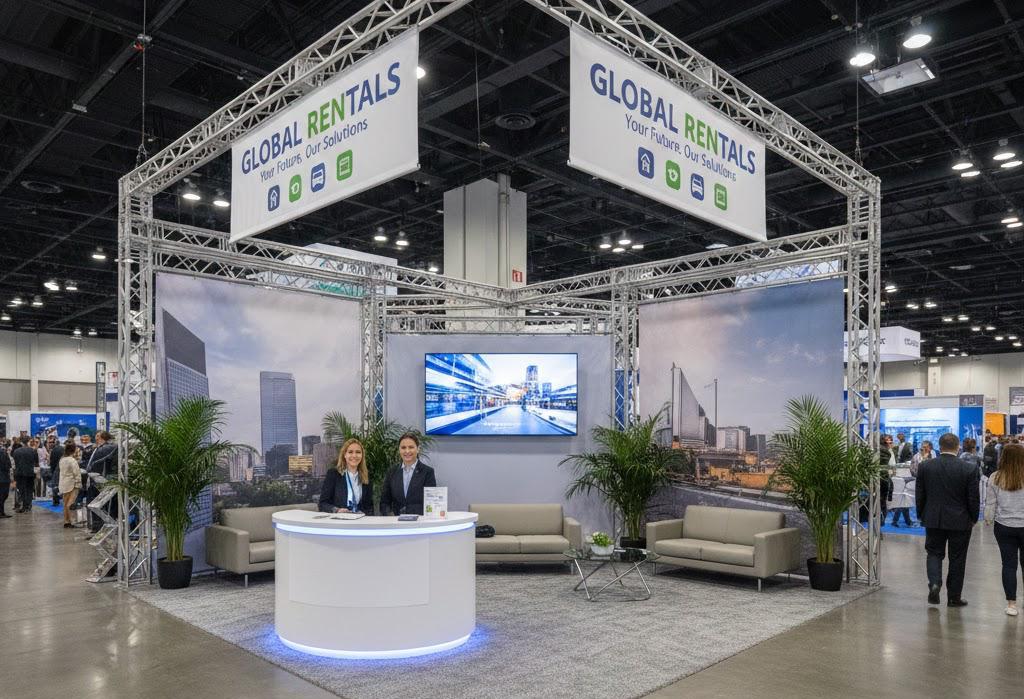
Exhibit rentals are a good business move, and a big win for those who want lower upfront costs and less of a logistical burden. It also makes sense for many exhibitors who may have an infrequent trade show calendar.
Pros of Renting
The major advantage of renting is its cost-effectiveness for initial outlays. Renting allows for a much lower upfront capital outlay than a custom purchased exhibit. This is best suited for new startups, smaller businesses, or those simply testing the waters at a new trade show.
Flexibility is another advantage. Rental structures can be easily reconfigured or changed to accommodate different marketing messages or specific products of focus for each show. It allows the exhibitor to be nimble enough to change its look and respond to evolving market conditions without bearing the cost of significant new purchases.
Rental exhibit setups also eliminate the burden of having to store or maintain the structure, which is usually a responsibility of the rental company. This spares internal equipment and also eliminates the costs of warehouse space, and at the very least, its upkeep. Additionally, renting a trade show exhibit usually offers the advantage of newer graphics, messaging designs, and technologies, allowing a company to present a fresh, contemporary look for each show.
Cons of Renting
While renting is flexible, it doesn't come without its disadvantages. Renting over the long haul can rack up more than the cost of purchase - this is especially true for upscale rentals.
Rental exhibits do not offer any custom designs, meaning you cannot customize them into your personalized brand experience, which may affect the attendee journey. While you can change the graphics, the internal structure and design are often a pre-made product. So while renting, your exhibit can appear like any other, which in turn erodes your brand uniqueness. Lastly, reliance on the rental company means you are dependent on their rental schedule, rental inventory, and quality control, which may introduce a degree of uncertainty.
The Reasons to Purchase Trade Show Displays
Buying a trade show display is an investment, and for many companies, it will pay off over time in branding, cost, and control.
Pros of Buying
One of the biggest benefits of purchasing a trade show display is the long term saving it can offer to frequent exhibitors. Even though the upfront cost is higher, the $ per show drastically decreases over time, which makes it a great investment for repeated trade show participants.
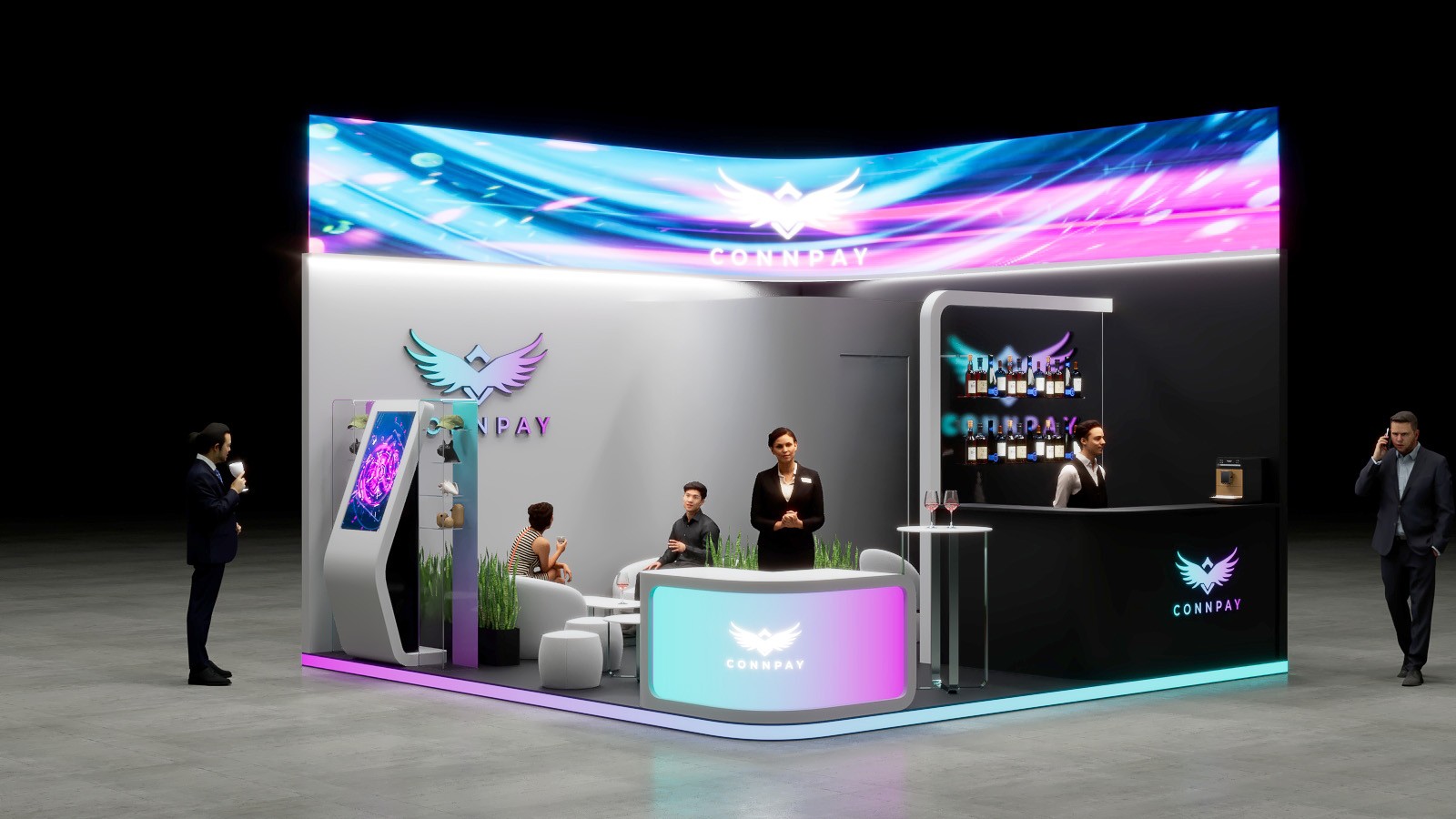
Next, its customization is what makes owned exhibits special. You have full creative control of how you wish to present your brand, your product, and the story you want to tell. This allows your exhibit to stand out on the trade show floor while promoting your branding by providing immersive experiences. For instance, you can choose to add event tech like LED screens, interactive technology like VR headsets, and custom product showcasing solutions like live demos.
By owning your exhibit, you can consistently market your brand to every trade show attendee you meet. It is a worthwhile investment that you can control the quality of, redesign, and implement special technologies as needed.
Cons of Buying
One of the main disadvantages of owning is the considerable upfront expense. The significant initial investment can be a hurdle for capital-limited businesses or for those just starting out in the trade show industry.
Owning also comes with considerable logistical commitments. Storage can be expensive and takes up a lot of space, especially if you have larger display systems. Maintenance and repairs can also add up, with reports showing that ongoing repairs to an owned exhibit after each show can amount to about 3 to 5 percent of the exhibit’s total value each year.
Going Past the Dollars: True ROI and Strategic Value Calculations
When choosing between buy and rent, it’s important to look beyond the sticker price and assess the total cost of ownership as well as the strategic value the two choices offer your business.
Quantifying Event ROI: Comparing Costs Over Time
A true financial ROI would compare your total cost of buying vs. renting for a projected period (normally 3-5 years). So you would calculate your total cost of renting by taking your average cost of rent per show x the number of shows you travel to in a given year.
Similarly, your cost of buying would be the purchase price of the booth + the cost of storage, maintenance (average 3-5% of exhibit each year), shipping + any updates.
If you travel to more than 3-5 shows in a year, with similar configurations, it may make the most financial sense to purchase a custom booth. Your ROI calculation comes down to determining which option has the lowest cost per trade show.
Non-Financial ROI and Brand Impact Measurement
A custom-purchased exhibit presents an unrivaled opportunity for branding, causing more brand recall and recognition by event attendees. The consistency of owned branding can result in being perceived as higher quality and higher conversion rates over time. By having your exhibit perfectly match your marketing strategy and product messaging, you can drive more engagement and create a more memorable experience for attendees.
Since it’s estimated 80% of trade show leads are never followed up on, a great, memorable exhibit can increase the probability of their leads being nurtured along to a sale, regardless of ownership [Moots AI, 2025]. Conversely, the flexibility of renting allows businesses to test new markets or product lines with lower risk, providing valuable market feedback that contributes to long-term strategic growth.
The Hybrid Style: Rent + Buy
In the interests of developing a strategic advantage, many companies find that a hybrid exhibit solution provides the ideal balance of ownership benefits with the flexibility of rentals.
What Is a Hybrid Exhibit?
A hybrid exhibit strategy means that you own or control the core elements of your trade show booth (such as structural components, vital furniture, or major, branded backdrops) and rent selected items for each show (such as graphics, custom extras, or modular items). This enables you to preserve a consistent brand presence through the owned items while customizing the look and function of the exhibit to the specific needs of each event.
Advantages of a Hybrid Approach
This mixed strategy offers many benefits. You get the customizability and brand control of owned items, coupled with the flexibility of rentals for graphics and temporary additions to the existing structure. That is huge, particularly when you want to feature different products for different shows.
Financially, it can be cheaper than buying a whole new display on each occasion or renting all items for multiple shows. It gives you the opportunity to try out new concepts or tech tools without purchasing the entire assembly.
When to Use the Hybrid Approach
A hybrid approach is a great fit for companies in transition or those with variable trade show needs. It can be especially efficient for brands that are updating or that regularly introduce new products.
It can also be a good fit for companies that exhibit in a variety of large and small formats; structures can be owned with the capability to supplement rental pieces for a range of footprints. For companies that exhibit in trade shows in moderation, a hybrid solution can present a good compromise between short-term and long-term options.
Navigating the Hurdles: Setup, Storage, and Professional Support
Whether you’re booking a package or you’re purchasing direct, your success on the trade show floor rests in part on how well you handle the logistics of taking the show out. Much of what goes on behind the scenes has to do with these same operational aspects of your show.
Inside Professional Setup and Teardown
Setting up and tearing down a trade show booth can be cumbersome and time-consuming. Employing a professional to handle installation and dismantling ensures that your exhibit area is set up correctly and stays within regulations at the venue. Owned exhibits often require careful coordination and budgeting of time and cost to get set up. With rentals, the installation and removal of your exhibit are generally included in the exhibit money and/or can be added onto your exhibit space for a smaller fee.
Holding Facility and Storage
Storage is also a major item, especially if you are the owner of your exhibit. Finding a climate controlled, secure storage space to keep your exhibition safe between shows so that you do not have damage or wear and tear. Unavoidable expenses. Maintenance duties for owners are a prime concern for them as well. They have to check, clean, and repair the materials and artworks in order to keep their exhibit in tip-top shape, and to make sure you can continue to effectively portray your brand to your clients. Renting often eliminates these worries as the rental company takes care of the storage and maintenance issues.
Transportation, Shipping, and Material Handling
The process of bringing your exhibit from your facility to the venue for the trade show and back involves logistics, shipping, and material handling. This is a highly specialized and expensive part of your show, often including specialized freight and drayage fees at the venue. If you are using an owned exhibit, you have to handle all of these arrangements yourself or with a third-party logistics provider. Rental shows, however, usually include or offer end to end shipping and handling. This makes things far easier for exhibitors.
Partners With Exhibit Professionals and Rental Companies
You can’t overestimate the value of a working relationship with experienced exhibit professionals and well-matched rental companies. They can lend valuable design, logistics, and trade show rule compliant advice. They’ll solve your certification, set‑up, shipping, and storage needs so you can concentrate on your marketing goals without worrying about the operational details. Whether you decide to buy or rent, these exercises can help boost both your success and your nerves.
Trade Show Planning & Success
Choosing to rent or buy a trade show display is not an easy decision. The answer will depend upon the specifics of your trade show objectives, financial resources, operational capacity, and overall long-term marketing strategy. If you want to save money and are looking for flexibility, then renting is the way to go. On the flip side, if you're looking for a sophisticated level of customization and brand control while planning on participating in multiple trade shows, purchasing will be the more economical choice. If you don't want to commit to either, the third alternative of going hybrid is a smart way to get the best of both worlds.
Level's custom event booth services can help you with seamless setup and disassembly, while providing an immersive event experience. Our booth fabrication services take care of all the hassles of trade exhibits, so you can focus on higher conversion rates.