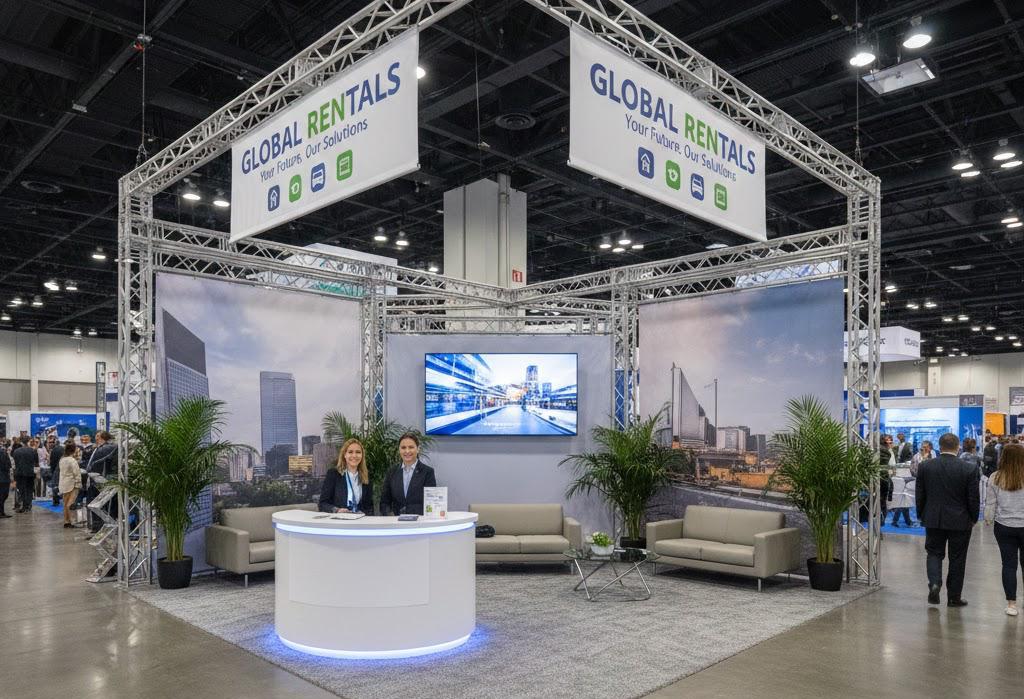
Education

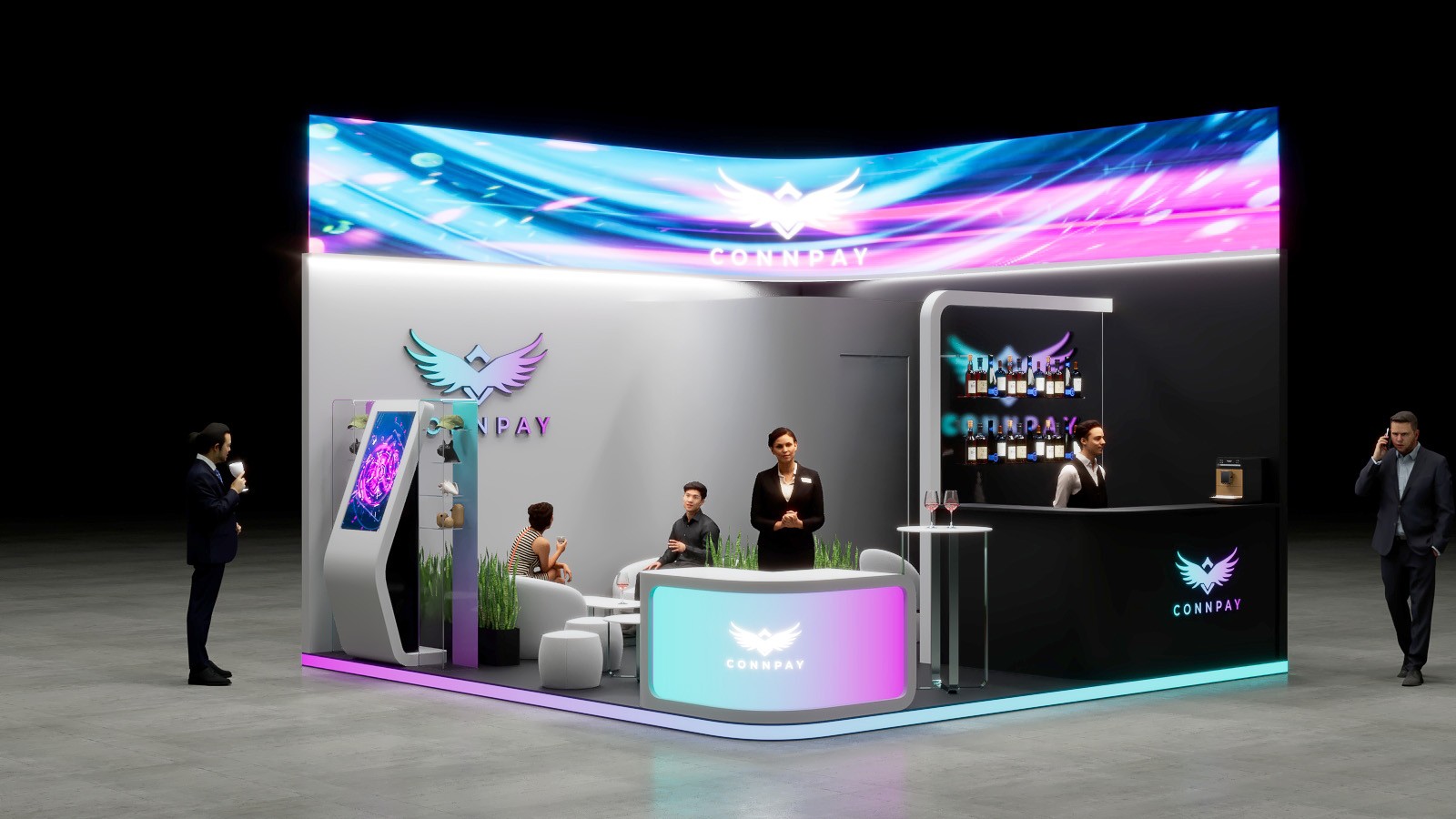
Trade Show Booth Design 2026: The Complete Exhibitor Guide
Trade show booth design in 2026 is no longer about looking impressive on the show floor. It's about building a physical space that stops the right people, holds them long enough to qualify, and moves them toward a real conversation.
At Level Booths, we've seen this shift play out across healthcare, tech, finance, and manufacturing — and the exhibitors winning aren't the ones with the biggest structures. They're the ones who treated their booth like a conversion tool before a single panel was printed.
This guide covers everything you need to plan, budget, and execute a high-performing exhibit — from booth design strategy and real 2026 pricing (including hidden costs most vendors don't mention) to the 3-zone layout framework our team uses to increase dwell time and qualified lead capture at every show.
Whether you're evaluating a modular rental or commissioning a full custom build, this is the framework to start with.
Why Trade Show Booth Design Is Different in 2026
The economics of exhibiting have changed. Tighter marketing budgets, shorter decision windows at shows, and Gen Z buyers entering B2B teams have collectively forced a rethink of what a booth is actually for.
Big, static structures that existed to announce a brand still exist. But they're not what's driving pipeline.
The best-performing booths in 2026 are designed around three measurable outcomes: how many of the right people stop, how long they stay, and how many of those conversations convert into a follow-up meeting. Everything else — the LED wall, the lounge furniture, the branded giveaway — is only worth keeping if it serves one of those three goals.
"In 2026, the best booths aren't the largest — they're the ones that keep people engaged and capture data," says Jordan Ellis, an experiential strategist for Fortune 500 brands. "Square footage matters less than how long visitors stay and what they do there."
This shift from spectacle to conversion is what smart exhibitors are designing toward. And it starts before the floor plan.
The 4 Booth Design Trends Shaping 2026
Understanding where the industry is heading helps you make smarter decisions before your brief goes to fabrication.
1. Results Over Wow Factor
Every feature in your booth should have a job. A large LED wall earns its budget if it increases stops. A lounge earns its space if it extends dwell time. If you can't tie a design choice to a specific outcome — more conversations, longer stays, better recall — it's a line item to cut.
Budgets are shifting away from oversized structures and toward better activations: smarter staffing, stronger content strategy, and technology that actually assists the visitor rather than performing for them.
2. Phygital Integration Done Right
AR, interactive screens, and gamification are no longer novelty — they're expected at enterprise-level shows. Freeman's 2025 data shows booths with AR or VR experiences get 85% higher attendee engagement and 40% longer dwell time on average.
The key is using technology that reduces friction, not creates it. AR that lets a visitor configure a product in real time earns its place. A VR headset that takes someone offline for 4 minutes and blocks foot flow doesn't.
3. Neuro-Inclusive and Comfort-First Design
Trade show floors are overwhelming by design — loud, crowded, overstimulating. Exhibitors who create contrast by building in calm zones (a quieter seating area, softer lighting in a meeting space, clear visual signage that reduces confusion) build a different kind of trust with visitors.
Comfortable people stay longer. People who stay longer qualify better.
4. Sustainability as Standard
For companies with ESG commitments — or exhibiting at European shows where sustainability requirements appear in RFPs — this is no longer optional. Modular systems that reuse structural components, LED lighting, and digital materials in place of print are now baseline expectations for many enterprise exhibitors.
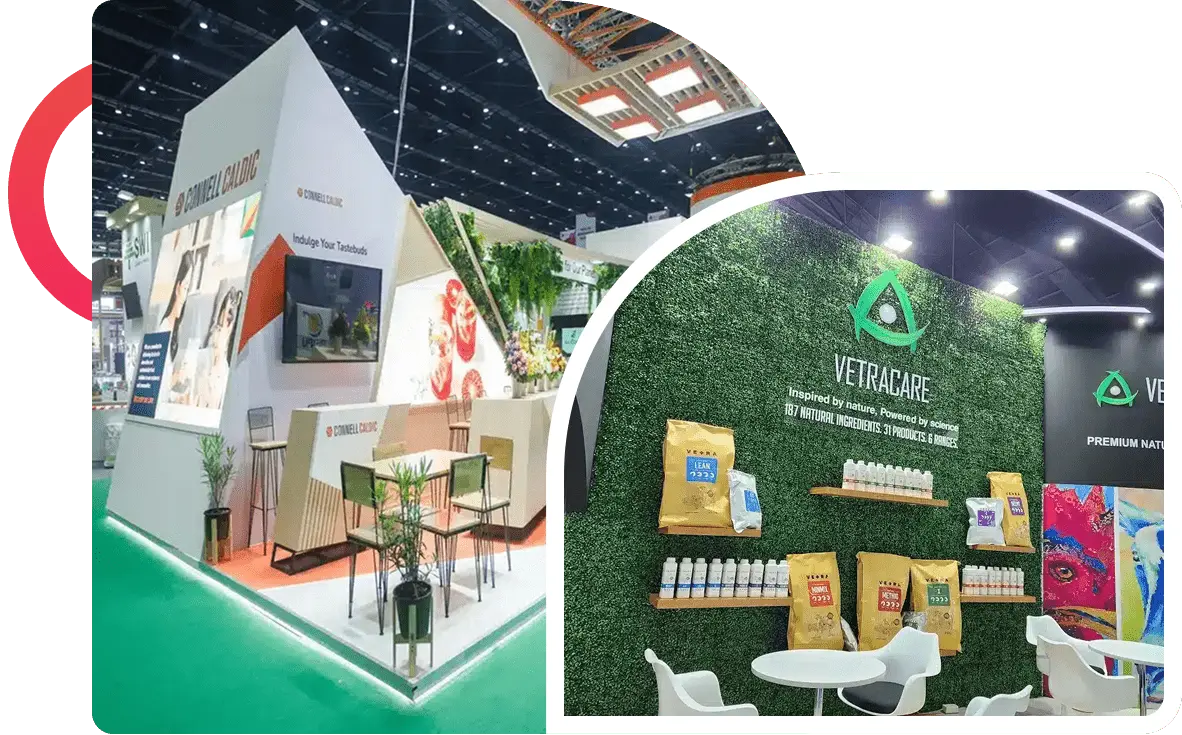
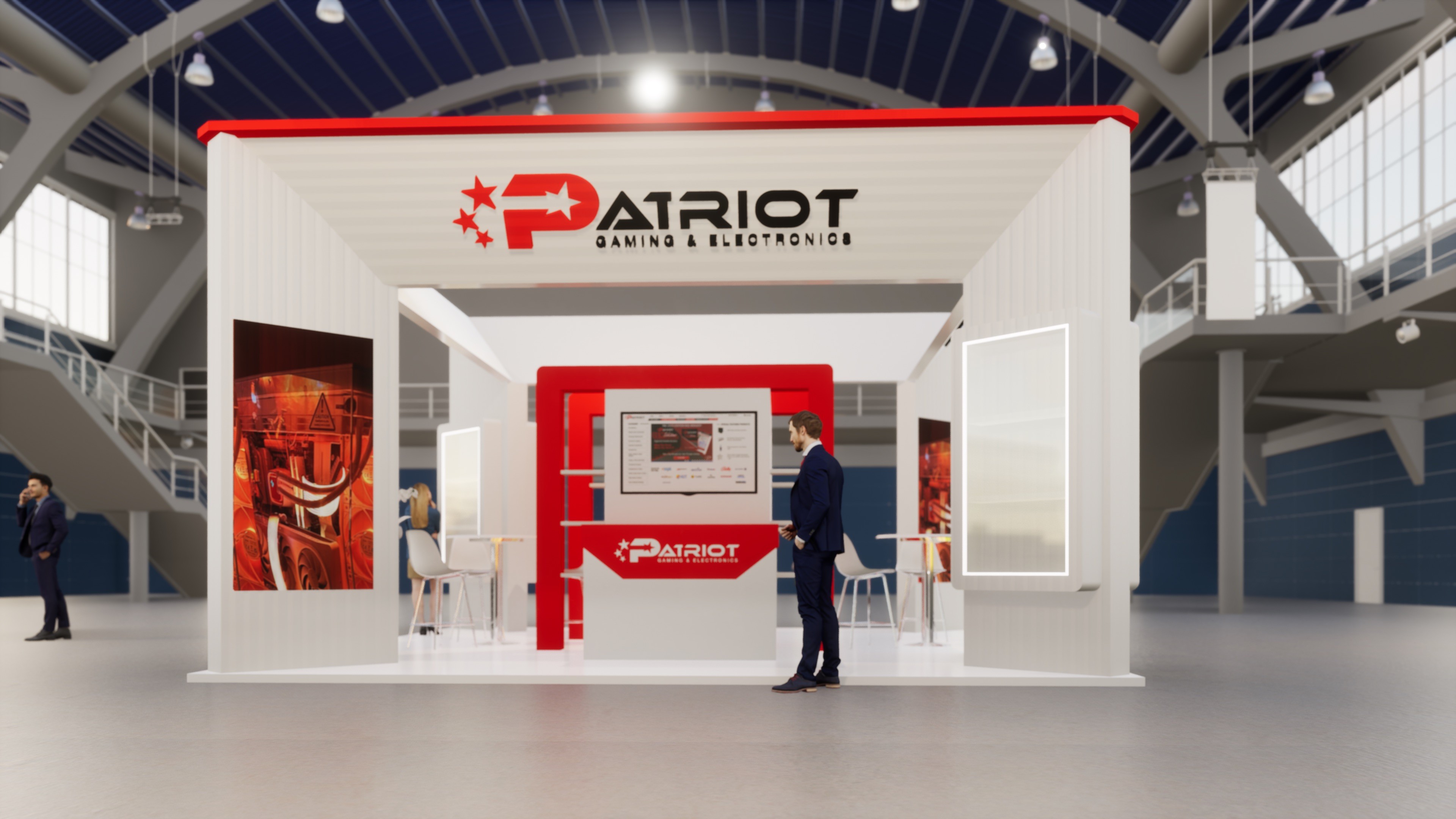
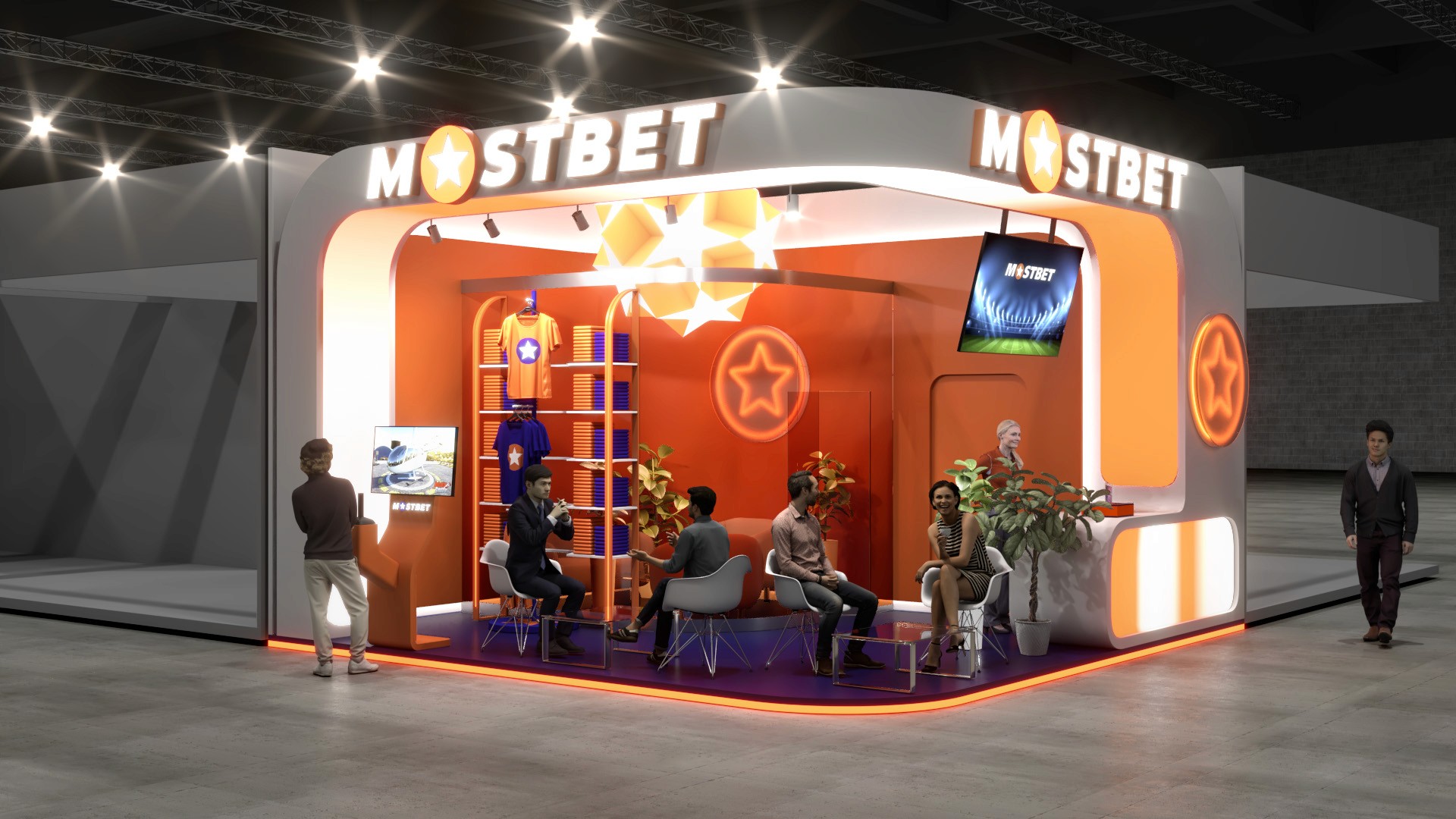
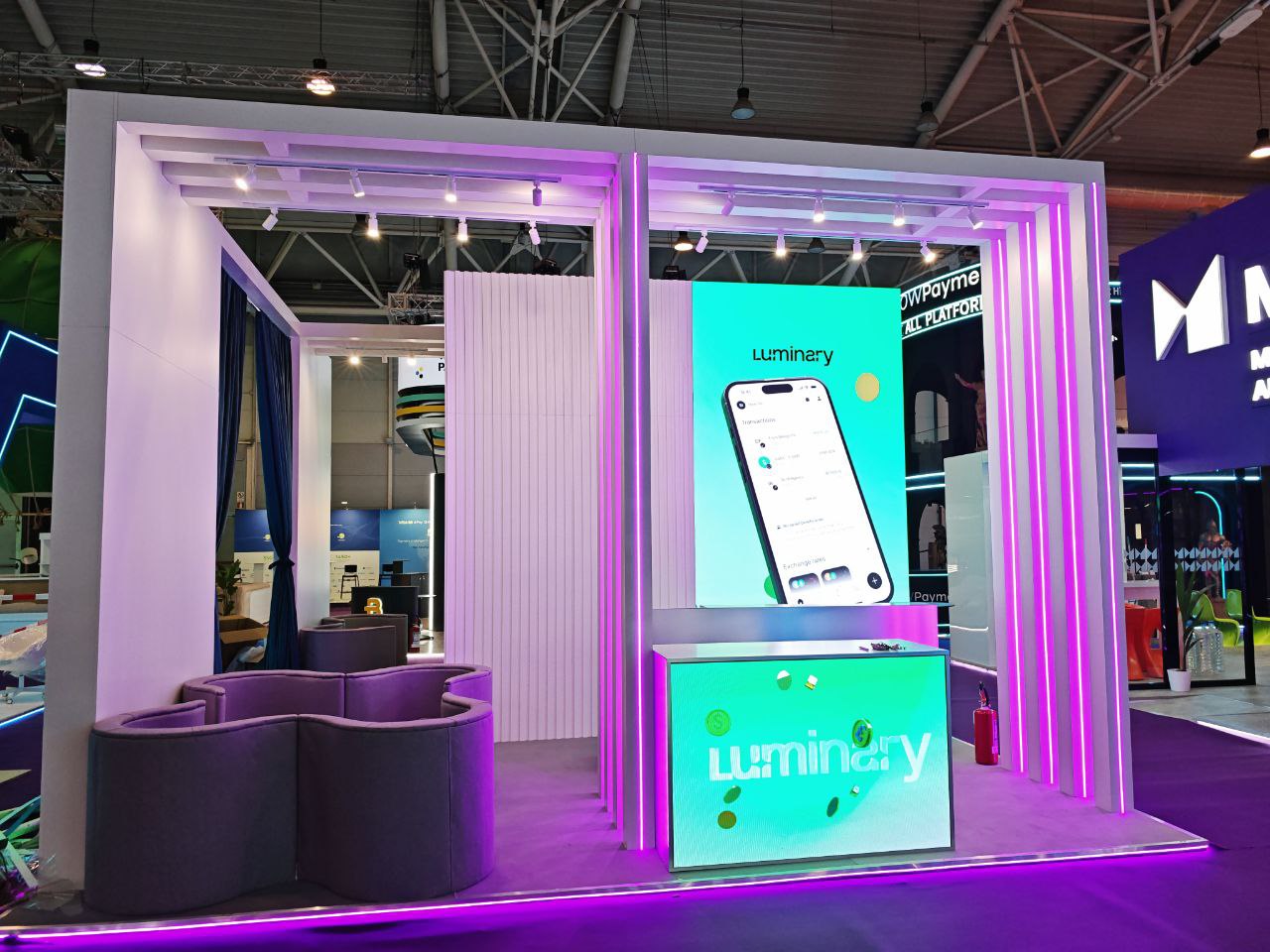
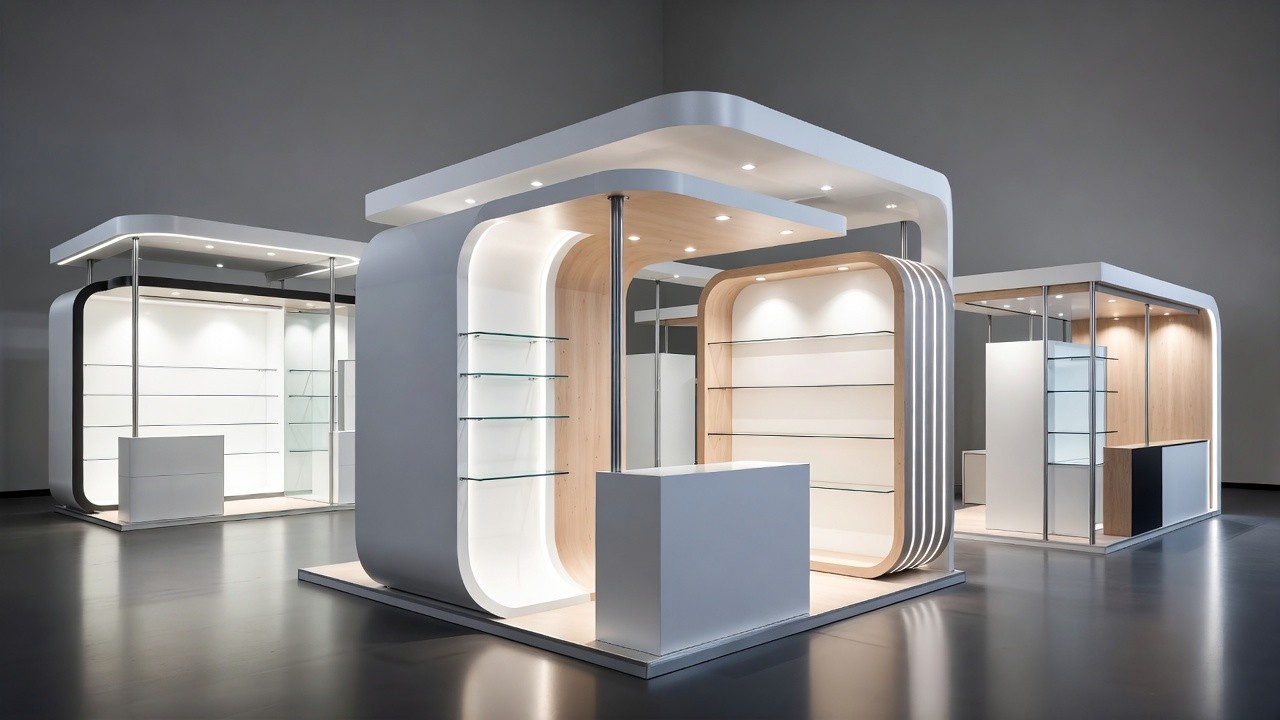
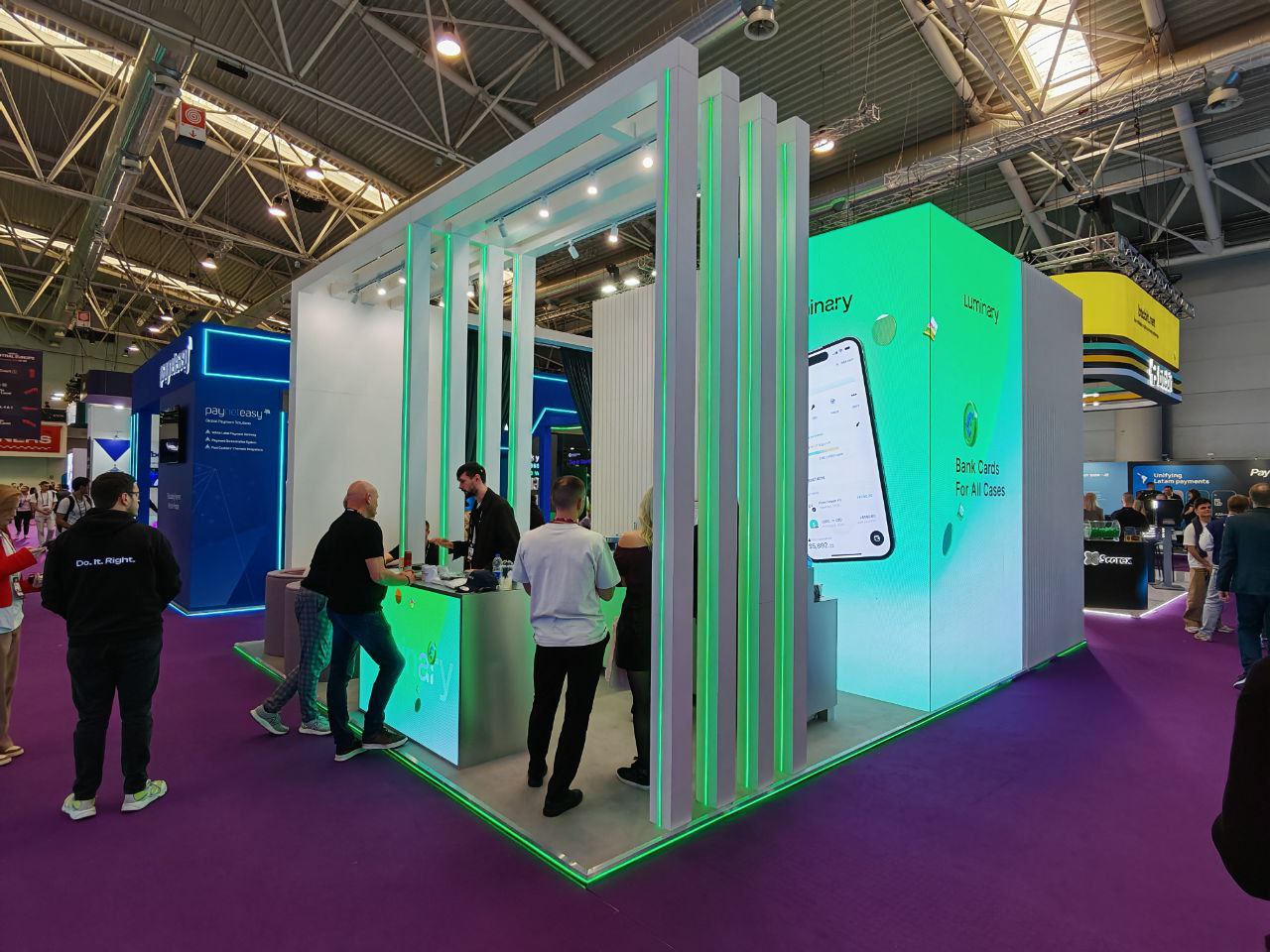
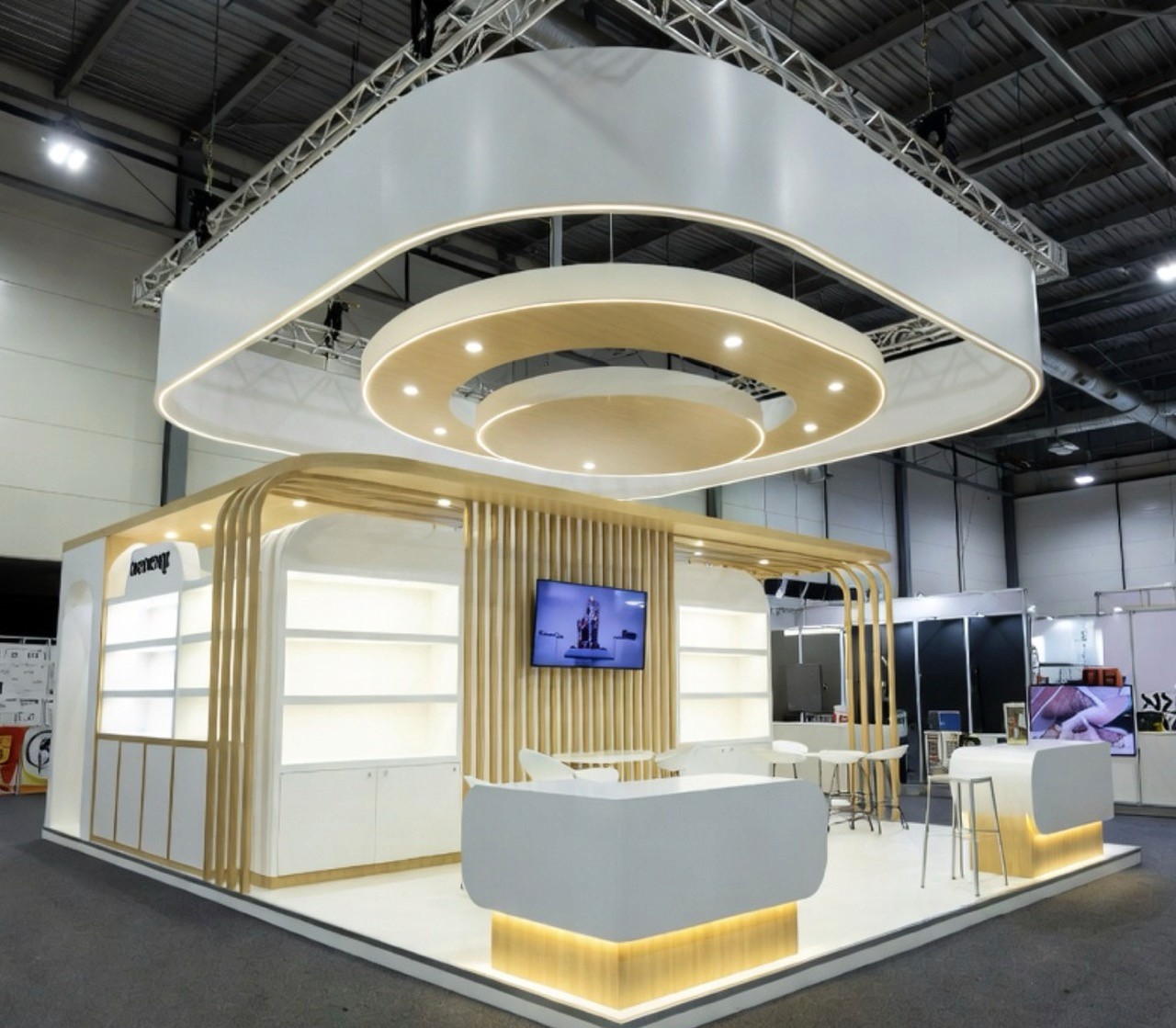
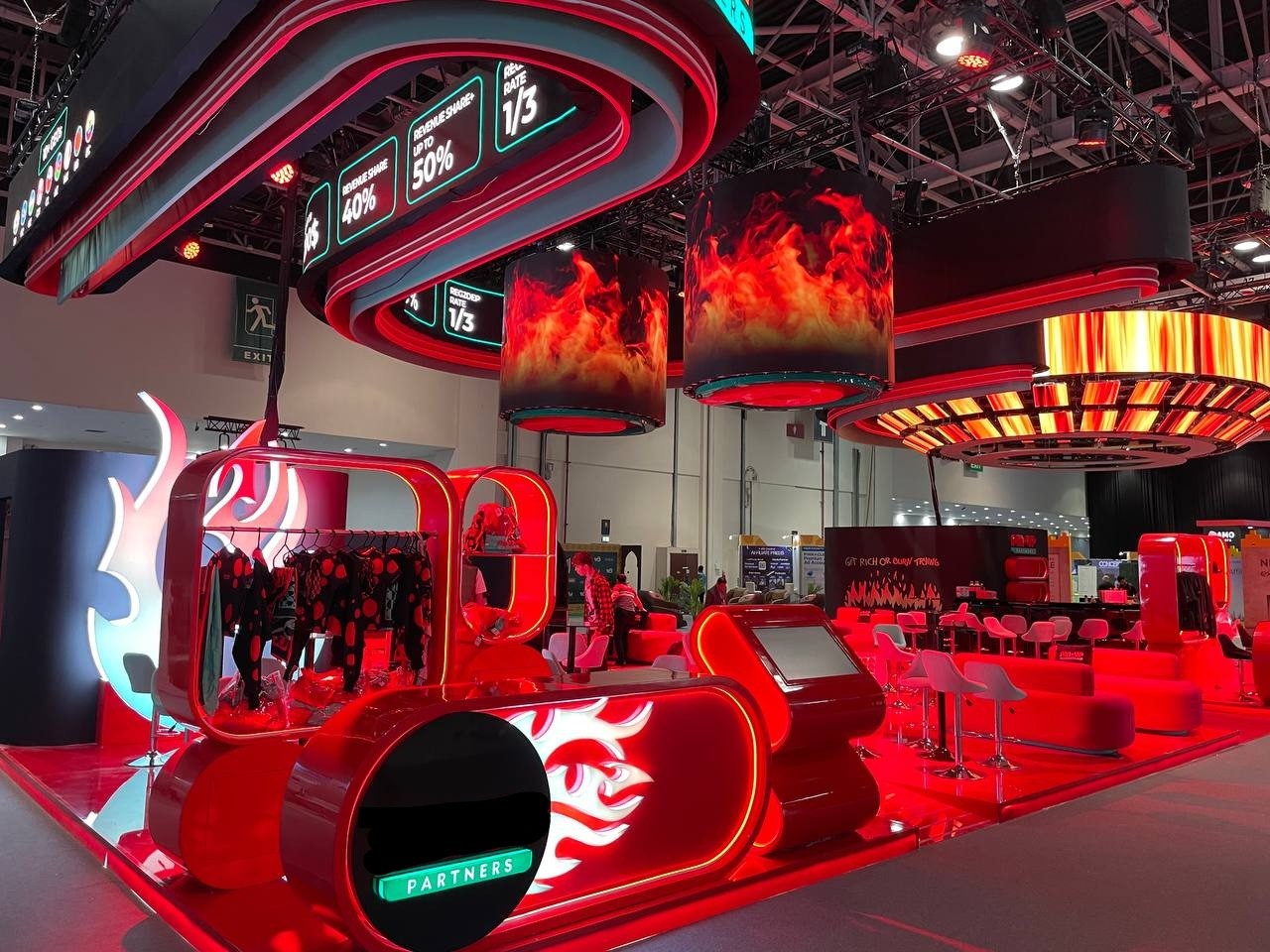
(Example of a modern booth layout—perimeter draws eyes, interior engages, back areas convert.)
Modular Rental vs. Custom Build: Which Is Right for You?
This is the most important strategic decision before any exhibit design work begins, and the answer depends entirely on your show schedule and brand stability over the next 3–5 years.
Modular rental is an operating expense — flexible, provider-managed for storage and logistics, and ideal for testing new markets, attending fewer than 2–3 shows per year, or any situation where your messaging or brand identity is actively evolving. Timelines run 6–10 weeks from brief to show floor.
Custom builds are capital expenditures amortized across 3–5 years. They're the right choice for flagship annual shows with stable brands, unique structural or experiential requirements, or exhibit programs running at high frequency with consistent show sizes. Custom fabrication timelines run 12–20 weeks minimum — plan 6 months ahead without exception.
| | Modular Rental | Custom Build |
Cost model | OpEx (pay per show) | CapEx (amortized) |
|---|---|---|
2026 cost per sq ft | $55–$150+ | $200–$350+ |
Timeline | 6–10 weeks | 12–20 weeks |
Flexibility | High | Low |
Storage | Provider handles | You pay ($1k–$5k+/year) |
Best for | New markets, changing brands | Flagship annual shows (CES, NRF, etc.) |
The honest question to ask: How stable is your brand and your show schedule for the next 3–5 years? If you have any doubt, start with modular. You can always graduate to a custom build once your program is proven.
Our team at Level Booths offers both paths — and hybrid builds that let you own the core structure while renting supplemental components per show. Explore our exhibit design services
Real Trade Show Booth Costs in 2026 (Including the Fees Most Vendors Don't Quote)
Budget planning for a trade show exhibit has two numbers: what you pay to build the booth, and what you actually spend to show it. Those are rarely the same figure.
Build Costs by Booth Size
Booth Size | Modular Rental (all-in) | Custom Build (Year 1) |
|---|---|---|
10×10 (100 sq ft) | $8,000–$20,000 | $25,000–$45,000 |
10×20 (200 sq ft) | $15,000–$40,000 | $50,000–$90,000 |
20×20 (400 sq ft) | $35,000–$80,000 | $100,000–$180,000 |
Costs at the upper end of these ranges reflect high-cost markets: Las Vegas, Chicago, and New York consistently run 15–25% above national averages for both fabrication and show services.
Hidden Costs Exhibitors Miss
Show services — the fees charged by venues and general contractors separate from your exhibit house — routinely add 30–40% on top of the build cost. The ones that catch exhibitors off guard most often:
Drayage. The fee charged by convention centers to move your materials from the loading dock to your booth space. It's calculated by weight and can exceed $10,000 for large exhibits. Always request a drayage estimate before your booth goes to fabrication.
Electrical. Power supply, outlets, and specialty lighting requirements are charged by venues at premium rates. A booth with significant LED or tech requirements can see electrical bills of $2,000–$6,000+ depending on venue and draw.
Union I&D (installation and dismantle). In cities with union labor jurisdictions — Las Vegas, Chicago, New York — you're required to use union crews for certain installation tasks. Budget an additional 20–30% for labor in these markets.
Storage and refurbishment. If you own a custom build, someone has to warehouse it between shows and touch it up before each one. That's $1,000–$5,000+ per year, depending on booth size and condition.
The rule of thumb: Whatever your build quote is, assume total show costs will be 1.3–1.4x that number before you finalize your budget.
The 3-Zone Booth Layout That Converts Visitors Into Leads
High-performing trade show booth design follows a predictable spatial logic. We call it the 3-Zone framework — and it works because it mirrors the natural arc of how a qualified visitor moves from curiosity to conversation.
Zone 1: The Hook (Perimeter)
Goal: Stop the right people walking by.
Your perimeter — the edges of your booth visible from 20–30 feet away — has roughly 3 seconds to communicate "this is relevant to you." Bold visuals, motion elements (LED walls, dynamic displays), and a single clear headline do the work here. The metric is stops, not compliments.
Design principle: eyes follow movement and contrast. Use that deliberately, not decoratively.
Zone 2: The Immersion Zone (Interior)
Goal: Give visitors a reason to stay.
This is where your experiential marketing investment lives — demos, AR product configurators, interactive screens, hands-on product samples, or structured seating for a guided conversation. Dwell time of 3–5 minutes signals real interest. Eight minutes or more indicates high purchase intent.
The design principle here is permission. Hands-on and self-guided experiences lower the social pressure of being "sold to" — which means staff can engage rather than intercept, and visitors qualify themselves naturally.
See how we've applied the 3-zone layout in recent exhibit builds
Zone 3: The Conversion Zone (Private Area)
Goal: Move qualified conversations toward a commitment.
A quiet seating area for 2–4 people, away from foot traffic, with integrated lead capture and a place to charge a phone, signals that this is a space for serious conversations. The psychology is straightforward: privacy makes a conversation feel more significant. Qualified leads, on-site meetings booked, and follow-up rate are the metrics here.
How to Measure True Trade Show ROI
Lead count is a vanity metric if you don't know the quality of what you captured. A booth that generates 400 badge scans but 0 follow-up conversations cost more per real lead than a smaller booth that generated 40 qualified meetings.
Metrics that matter:
- Dwell time — average minutes per visitor in your booth
- Qualified conversations — not every scan, only interactions with real intent
- On-site meetings booked — a measure of Zone 3 effectiveness
- Post-show pipeline — opportunities opened within 30 days of the show
- Cost per engaged minute — your total budget divided by total visitor-minutes in the booth
The Cost-Per-Engaged-Minute formula:
> Total Spend ÷ (Visitors × Average Dwell Minutes) = Cost Per Engaged Minute
Example: $50,000 ÷ (500 visitors × 6 min average) = $16.67 per engaged minute
Track this across shows to understand whether your booth design is improving or declining in efficiency over time. It's the one number that ties exhibit design decisions directly to budget accountability.
What to Look for in a Trade Show Booth Design Company
Not every exhibit house approaches booth design the same way — and the difference between a fabrication-only vendor and a full-service exhibit partner can be the difference between a beautiful booth that doesn't convert and one that drives real pipeline.
Here's what separates the right partner from the wrong one:
They start with your goals, not your floor plan. A good exhibit design partner asks about your target attendee profile, your lead qualification process, and your success metrics before they ask about dimensions.
They understand show-specific logistics. Venue regulations, union jurisdictions, drayage at major convention centers, electrical requirements — a partner who doesn't navigate these proactively will cost you money and stress during move-in.
They provide transparent all-in pricing. Build cost plus show services, with no surprises at the invoice stage.
They support you nationwide. If your show schedule includes multiple cities, your exhibit partner should have relationships and logistics experience across US venues — not just in their home market.
They track outcomes, not just deliverables. The best booth design companies measure the performance of what they build and use that data to improve your next show.
At Level Booths, we've built exhibit programs for healthcare brands, enterprise tech companies, financial services firms, and manufacturing clients — from first-time exhibitors to Fortune 500 teams with multi-show annual calendars. Our process starts with strategy, not specs.
Mistakes to Avoid at Your Next Show
Designing for beauty, not flow. A visually striking booth with poor traffic routing creates bottlenecks. Map how visitors will physically move through the space before you approve any design.
Deploying tech without staff to run it. Interactive experiences require people. A touchscreen with no one to facilitate it becomes decoration fast.
Ignoring storage before you build. If you're commissioning a custom exhibit, you need a plan for where it lives between shows and what it costs.
Weak lead capture. Badge scanning captures contact info, not intent. Build qualification into the conversation itself — and train your staff on it before day one.
Rushing the timeline. Start the conversation with your exhibit design company 6 months before your target show. Twelve to twenty weeks for a custom build is the minimum, not the exception.
Frequently Asked Questions About Trade Show Booth Design
How much does a 10x10 trade show booth cost in 2026?
A 10x10 modular rental runs $8,000–$20,000 all-in for the exhibit itself. A custom build in year one is $25,000–$45,000. Neither figure includes show services — drayage, electrical, and union I&D can add 30–40% on top. Always request a total-cost estimate from your exhibit partner before finalizing your budget.
How much does a 10x20 trade show booth cost?
Budget $15,000–$40,000 for a modular 10x20 rental and $50,000–$90,000 for a custom build in year one. In high-union markets like Las Vegas, Chicago, or New York, plan for an additional 20–30% in labor and drayage on top of the build cost. Getting a show-services estimate early prevents the most common budget surprises.
Should I rent or buy my trade show booth?
Rent if you're attending fewer than 2–3 shows per year, testing a new market, or expect your brand or messaging to evolve in the next 12–24 months. Buy if you're committed to a flagship annual show with a stable brand and can realistically amortize the cost over 3–5 years. When unsure, start modular — you can always commission a custom build once your show program is proven and your ROI benchmarks are established.
How long does it take to design and build a trade show booth?
A modular rental typically takes 6–10 weeks from initial brief to show floor delivery. A custom build requires 12–20 weeks minimum. For any major show, start conversations with your exhibit design company at least 6 months in advance to allow for design iterations, fabrication, shipping coordination, and show-services scheduling.
What is drayage and how much does it cost?
Drayage is the fee charged by convention centers to transport your booth materials from the loading dock to your assigned floor space. It's calculated by weight — not by booth size — and can exceed $10,000 for large exhibits at major venues. It's one of the most consistently overlooked line items in exhibit budgeting. Ask your exhibit partner for a drayage estimate before the design is finalized.
How do I measure trade show ROI?
Look beyond lead count. Track dwell time, qualified conversations, on-site meetings booked, and pipeline generated within 30 days of the event. Use the Cost-Per-Engaged-Minute formula: Total Spend ÷ (Visitors × Average Dwell Minutes). Tracking this across multiple shows tells you whether your exhibit design is getting more efficient over time — and where to invest next.
What should I look for in a trade show booth design company?
The most important signal: they ask about your goals before they show you floor plans. A strong exhibit partner understands venue logistics and union regulations at major US shows, provides transparent all-in pricing, offers storage and refurbishment for custom builds, and tracks the performance of what they build. At Level Booths, our process starts with a strategy conversation — not a spec sheet. Schedule a booth strategy call
Why Exhibitors Choose Level Booths
We're a full-service exhibit design and fabrication partner for US-based exhibitors — from startups running their first 10x10 to enterprise teams managing multi-show annual programs.
Our process starts with your goals: who you're trying to reach at the show, what a qualified conversation looks like for your team, and what success looks like at 30, 60, and 90 days post-event. Then we design backward from those outcomes — layout, technology, brand activation, and lead capture — rather than starting with aesthetics and hoping for results.
We handle strategy, exhibit design, booth fabrication, logistics, nationwide installation, and post-show ROI tracking. Modular, custom, or hybrid — we'll tell you which one fits your program before we quote anything.
"Level Booths shifted us from 'look impressive' to 'drive conversations.' Qualified leads up 40%." — Healthcare Tech Marketing Director
Ready to plan your 2026 booth?
The earlier you start, the more options you have — on design, on budget, and on show-floor strategy. Call our team at 321-240-9457 or schedule a free booth strategy call and we'll walk through your show calendar, goals, and the right exhibit path for your program.