Education

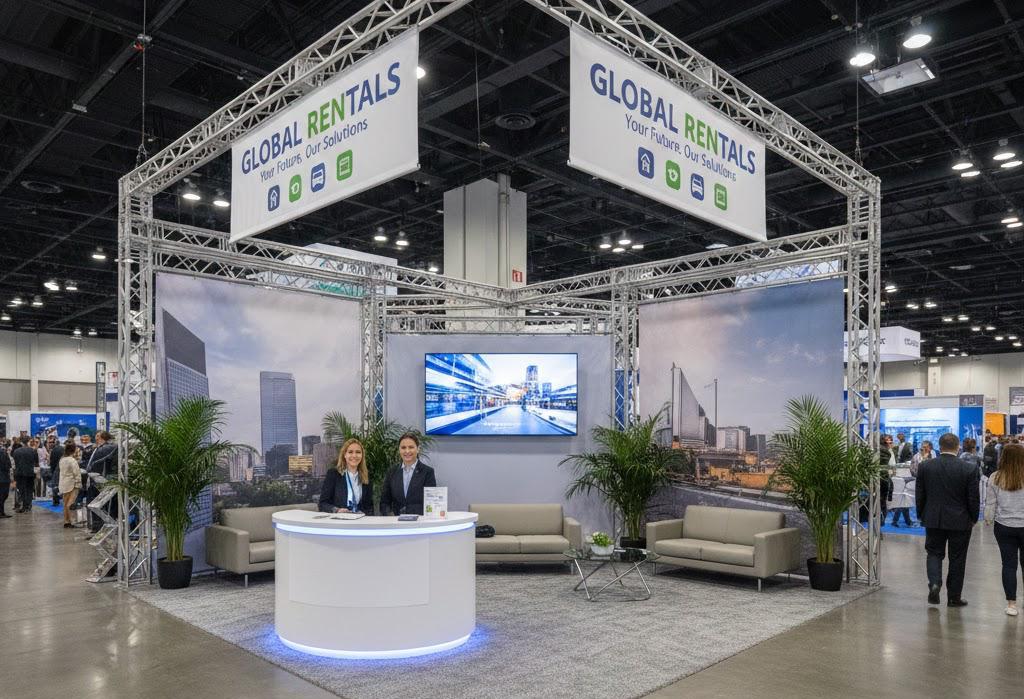
Even the best planned trade show booths are susceptible to poorly planned logistical operations.
With this guide, you'll find a framework for efficiently planning your trade show shipping, so you can fully maximize the benefits of your show presence.
Challenges of Event Logistics
Trade show logistics are not conventional shipping. The pressures and demands are completely different because they require custom handling. As we'll explore, your exhibit doesn't just depend on the quality of your products or services, but on your logistics support and execution.
Hard Deadline and Space Regulations
The defining characteristic of shipping for a trade show is the element of time. You have a limited window to get your exhibits in and out of the convention hall to match the move in and move out dates. In some cases, the event venue will only accept trade show freight at short notice before the show opens. Miss this window, and you fly under “forced freight” strains. It’s a meticulous scheduling game to be played against a clock that trade show organizers and venues set. This means you have to work backwards with your shipping company from move in to find your due dates for shipping and production.
Heavy or Delicate Equipment
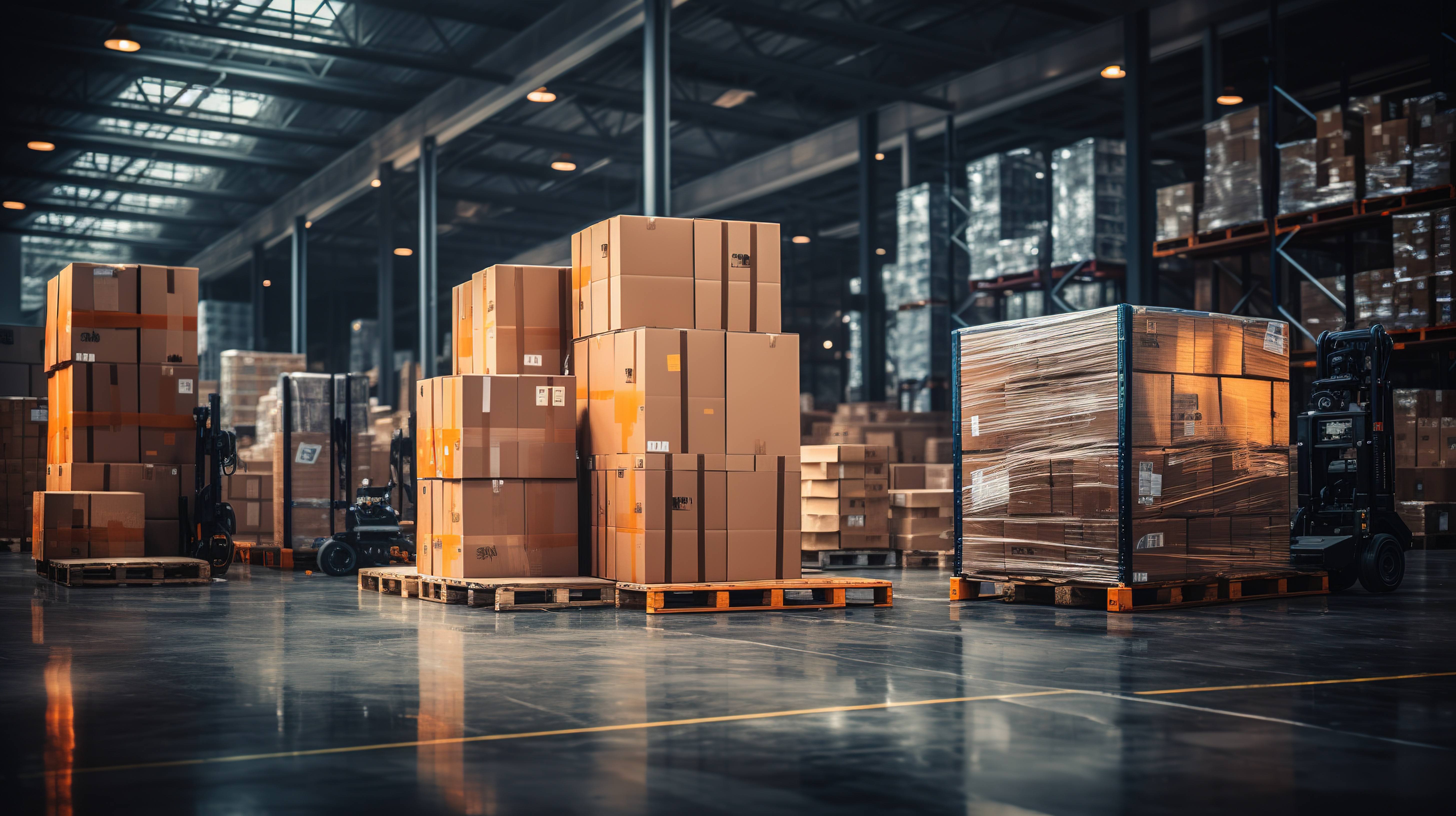
Trade show booths and their parts are custom fabricated, expensive, and fragile. The packaging and handling of these exhibit materials are very different from your ordinary commercial inventory. Trade show exhibits can contain display screens with lamps behind glass, fragile structures, or highly sensitive machinery. As a result, trade exhibits need special packing, crating, and loading protocols to avoid excessive damage during transport and on site. It also requires choosing shipping services with logistics experience that know exactly how exhibitor materials must be handled.
Complexities of On-Site Logistics and Union Labor Rules
When the shipment gets to the trade show floor, a lot of things get complicated (and expensive). Most big convention centers have exclusive service contractors that are subject to strict union labor practices. So, while you can provide your own crew to set up your stall, the actual shipping of freight from your loading dock to your booth (and back) is normally done by unionized material handling professionals. Knowing on-site logistics, the general contractor, decorators, and their material handling fees are key to avoiding surprise costs.
The Key to Success: Early Planning and Preparation
The foundation of successful trade show shipping is early preparation. The earlier you begin, the more control you have over timelines, budget, and avoidable pitfalls.
Understanding Your Exhibitor Manual
Your trade show event manual is the most important document when it comes to logistics. Inside this manual are all the rules, regulations, venue schedules, order forms, and contact information from the trade show organizer and the sanctioned general contractor. From shipping instructions, drayage fees, electrical and internet order forms, this manual should be your logistical bible, because inside are the instructions for avoiding costly mistakes.
Dimensions, Weight, and Contents
Before you can supply your shipping plan, you need to know exactly what trade show assets you're shipping. Measure and weigh everything in your trade show booth, as well as everything that accompanies it (crates, cases, displays, promotional items, booth furniture, etc.). Knowing the exact size and weight is useful for getting the best quote comparisons for your shipping budget, deciding the most economical method of transport, and meeting the requirements of your trade show venue. A detailed inventory of everything in every case and crate will also be beneficial for customs (if applicable) and for sorting out the work on site.
Detailed Shipping Schedule
Now that you have the exhibitor manual and an accurate assessment of your freight, you can map out your freight schedule. The shipment schedule should march backwards from your desired move in date. Don't forget to factor in these important dates:
When your trade show booth materials need to be collected.
When the deliveries have to leave your location.
When shipments are scheduled to arrive at the advance warehouse or directly at the venue.
Deadlines for Material Handling Agreements (MHA) submissions.
Important dates to bring back your empty crates after the show.
Proactive assignment scheduling reduces the chances of delays and the “last-minute scramble” they prompt, a known way to inflate shipping costs.
Strategic Shipping Options: Advance Warehouse vs. Direct-to-Show
Deciding between the two is important in terms of control, money, and the on-site coordination and setup.
Advance Warehouse
Usually, the most desirable and economical way for exhibitors to ship is to an advanced warehouse. Freight arrives at an assigned warehouse a few days, sometimes several weeks, before the show moves in, leading to multiple benefits:
Buffer Time: Additional time shields the customer from transportation hiccups. If the carrier has a problem, and the shipment remains at the warehouse, you are still protected.
Cost-Effective: The costs for shipping freight delivery rates are typically reduced for deliveries to the advanced warehouse compared to direct-to-show.
Consolidated Deliveries: The warehouse organizes deliveries, which arrive at the location during the target delivery windows, reducing line congestion and wait times at loading docks.
Direct-to-Show
Expedited shipping right to your exhibition venue is possible for small booths or very tight deadlines. However, these have higher levels of risk and often, costs.
Tight Delivery Times: You must stick closely to the venue's specific times and dates for delivery. Failing to do so can result in hefty fines.
Higher Material Handling Metrics: Material Handling billing is typically higher with direct-to-show shipments.
Greater Chance of a Delay: Any transportation problems can cause your exhibit to be late for setup.
Direct-to-show shipping is typically most appropriate for smaller shipments that are easily handled with parcel carriers or for last-minute additions.
Hybrid Methods
A hybrid logistics plan can work for many trade shows. For example, larger components of your trade show booth may arrive at an advance warehouse via freight, and smaller promotional items or literature may arrive by parcel carrier (such as FedEx, UPS, DHL) directly to the show venue. Be sure to check your parcel carrier’s trade show shipping policies. Some parcel carriers may have drop-off procedures or restrictions. Verify the delivery address, booth number, and delivery date for both freight and parcel shipments.
Understanding Trade Show Shipping Costs
Probably the most intimidating item on the trade show budget is trade show shipping. It’s a multi layer fee that extends far beyond the basic freight rate.
Material Handling & Drayage
When it comes to trade show shipping, there are two terms that constantly pop up: material handling and drayage. Drayage is the transport of materials from a shipping vessel or terminal to a warehouse or distribution center. In trade show terms, it’s the transportation of your freight from the receiving dock to your booth space, and back. It’s often the number one cost associated with trade show shipping and can be 50-70% of your total shipping cost.
Tracking and Controlling Drayage Costs
The drayage costs are usually based on weight, with charges per hundredweight (cwt). Knowing how to calculate them is the first step to being able to control them:
Advance Warehouse Shipping: Typically lower rates, as mentioned above.
Efficient Packaging: Standardized crates can sometimes make handling better.
Accurate Weight Estimation: Exact weight declarations can be hard to decipher, but they can also help avoid unpleasant surprises.
Getting MHA In On Time: Accurately completing the Material Handling Agreement in time for the early bird deadline can lock in better rates.
What To Expect With The Unexpected
Be prepared in advance for the unexpected costs that may arise, besides material handling. Namely:
Venue Fees: Some venues require dock fees or special access fees.
Surcharges: Fuel surcharges, lift gate costs, and remote area surcharges.
Labor Preferences: If you ship directly to the show, you may be charged extra for unloading.
Return Shipping Fees: The costs of picking up your exhibit materials after the trade show event.
Storage: Fees for empty crates/materials stored by the venue.
Forced Freight Penalties: If your carrier doesn’t pick up your shipment, the venue’s contractor will, if necessary, do the job - usually for a much higher charge.
Packaging and Labeling
Correct packaging and accurate labeling are not formalities - they are a vital protection of your valuable exhibit contents and are also a logistical requirement.
Secure Packing
Your trade show display and booth are assets you want to keep safe. By using robust, heavy-duty reusable crates or cases that are built for repeated traveling, you save costs while protecting your investment.
Cushioning: Add plenty of padding, foam, or bubble wrap to give a shock cushion.
Internal Strapping: Secure items inside crates to prevent shifting.
Weather Resilient: If shipping in serious weather, include moisture resistant packaging.
Disassembly: Pack in a logical sequence to facilitate reassembly on site.
Shipping Labels
Clear, accurate labels are essential. A wrong label can mean your shipment takes you off course to the wrong dock, at the wrong hall, or worse, to the wrong city.
Clarity of Identification: The booth number, the name of the exhibitor, the event name, destination address (including advance warehouse or event venue), and contact information should be on every crate.
Multiple labels: Put labels on at least two faces of each crate.
Return Labels: Pre-apply return labels for empty crates for outbound orders.
Color-Coding: Use color-coded labels to identify a shipment or stage.
Bill of Lading
Bill of Lading (BOL) is the most important piece of documentation accompanying every shipment. It's a receipt for the shipment, a contract between the shipper and the carrier, and proof of ownership. A properly drafted and detailed BOL is critical for trade show shipping:
Precise Description: It should precisely depict the contents, weight, and count of pieces.
Destination Details: Set the correct address of the advanced warehouse or venue.
Shipper and Consignee Details: Check that all contact information is accurate.
Tracking: You can find the tracking number in the BOL to track your shipment.
On-Site Administration
The setup of your trade show booth doesn’t stop when it reaches the hall.
Marshaling Yard And Targeted Move-Ins
After you arrive on-site, you should expect your truck to be dropped off at the marshaling yard. A marshaling yard is a waiting area where drivers check in and listen to be called up to the loading docks to begin their move-in at the pre-scheduled time. The marshaling yard can be a frenzy, so keep open lines of communication with your driver and logistics partner.
Booth Delivery and Immediate Damage Inspection
At the dock, the material handling team will take your freight off their truck and deliver it to your booth space. When the crates are on your floor, inspect them immediately for any visual damage to the packaging and the contents. Take photographs, and write down the damage on the delivery receipt.
Wrapping Up
A successful trade show shipping experience for exhibitors starts by being familiar with the unique demands of trade show logistics, by early and detailed planning, and by making informed decisions about shipping options and partners.
Level's booth builder services bypass the logistical challenges to get your booth up and running. We take care of everything from installation to dismantling so you can focus on what you do best.